As a supplier of PVC Lay Flat Hoses, the question of whether these hoses are resistant to sunlight degradation is one that I frequently encounter among our customers. Understanding the impact of sunlight on PVC materials is crucial for both us as suppliers and our clients.
Understanding Sunlight Degradation
Sunlight is a complex mixture of different wavelengths of light, including ultraviolet (UV) rays, visible light, and infrared (IR) radiation. Among these, UV rays are the primary culprits for causing degradation in many materials, including PVC. When PVC is exposed to UV rays, a series of chemical reactions occur. The high - energy UV photons can break the chemical bonds in the PVC polymer chains. This leads to a phenomenon known as chain scission, where the long polymer chains are broken into smaller fragments. As a result, the physical and mechanical properties of the PVC are compromised.
The visible effects of sunlight degradation on PVC can vary. In the early stages, the material may start to fade, losing its original color. The surface may become dull and rough, which not only affects the aesthetic appearance but can also indicate that the structural integrity of the material is being affected. Over time, the PVC may become brittle, cracking and splitting more easily. This is particularly concerning for PVC Lay Flat Hoses as it can lead to leaks and failures during use.
Resistance of PVC Lay Flat Hoses to Sunlight Degradation
The resistance of PVC Lay Flat Hoses to sunlight degradation depends on several factors.
Quality of Raw Materials
The type of PVC resin used in the manufacturing process plays a significant role. High - quality PVC resins are often formulated with additives to enhance their resistance to UV rays. For example, some manufacturers use stabilizers that can absorb UV radiation and convert it into heat, reducing the amount of energy available to break the polymer chains. Impact modifiers can also be added to improve the flexibility and toughness of the PVC, making it more resilient to the effects of degradation.
At our company, we are committed to using only the highest - quality raw materials in the production of our PVC Lay Flat Hoses. We carefully select PVC resins that are specifically formulated to withstand prolonged exposure to sunlight. Our suppliers have a proven track record of providing materials that meet strict quality standards, ensuring that our hoses have a high level of resistance to UV degradation.
Additives
In addition to the base PVC resin, the use of additives is crucial for enhancing sunlight resistance. UV absorbers are one of the most common additives used. These chemicals work by selectively absorbing UV radiation and dissipating the energy in a less harmful way. Hindered amine light stabilizers (HALS) are another type of additive that is widely used. HALS can react with the free radicals generated during UV exposure, preventing them from causing further damage to the polymer chains.
We incorporate a combination of these additives into our PVC Lay Flat Hoses during the manufacturing process. Our in - house R & D team continuously tests different formulations to optimize the performance of these additives and ensure that our hoses provide long - term protection against sunlight degradation.
Manufacturing Process
The manufacturing process can also affect the sunlight resistance of PVC Lay Flat Hoses. Proper extrusion and curing processes are essential for ensuring that the additives are evenly distributed throughout the material and that the polymer structure is well - formed. Inadequate manufacturing processes can lead to uneven distribution of additives, leaving some areas of the hose more vulnerable to sunlight degradation.
Our state - of - the - art manufacturing facilities are equipped with the latest technology to ensure that every PVC Lay Flat Hose we produce meets the highest quality standards. Our experienced operators closely monitor the manufacturing process at every stage, from the mixing of raw materials to the final packaging, to guarantee the consistent quality and sunlight resistance of our hoses.
Testing and Certification
To provide our customers with confidence in the sunlight resistance of our PVC Lay Flat Hoses, we conduct rigorous testing. We use artificial weathering chambers that simulate the effects of long - term sunlight exposure in a relatively short period. These chambers can control factors such as UV intensity, temperature, and humidity to accurately mimic real - world conditions.
In addition to our in - house testing, we also seek third - party certifications. These certifications are issued by independent laboratories that evaluate the performance of our hoses against international standards. Having these certifications not only demonstrates our commitment to quality but also provides our customers with objective evidence of the reliability of our products.
Applications and Considerations
PVC Lay Flat Hoses are used in a wide range of applications, many of which involve outdoor use. In agricultural irrigation, for example, these hoses are often left exposed to sunlight for extended periods. In construction sites, they are used for water transfer and dewatering, also experiencing frequent sunlight exposure.
However, even with our high - quality and sunlight - resistant PVC Lay Flat Hoses, there are still some considerations for our customers. While our hoses are designed to withstand long - term sunlight exposure, it is still recommended to minimize unnecessary exposure when possible. For example, storing the hoses in a shaded area when not in use can further extend their lifespan.
Comparing with Alternative Products
There are other types of hoses available in the market, such as rubber hoses and polyethylene (PE) hoses. Each type has its own advantages and disadvantages when it comes to sunlight resistance.
Rubber hoses generally have good flexibility and resistance to abrasion. However, they can be more prone to ozone and UV degradation compared to well - formulated PVC Lay Flat Hoses. PE hoses are lightweight and have good chemical resistance. But in terms of sunlight resistance, PVC Lay Flat Hoses often have an edge, especially when they are properly formulated with UV - resistant additives.
Related Products
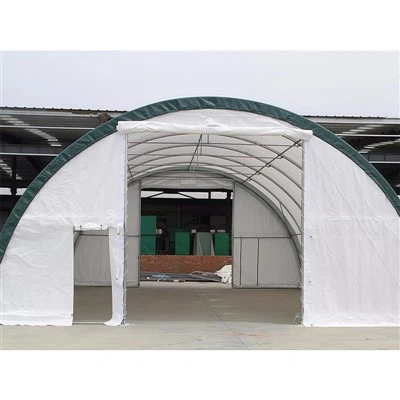
We also offer other PVC industrial finished products, such as PVC Coal Canopy and PVC Tensile Membrane. These products, like our PVC Lay Flat Hoses, are designed with sunlight resistance in mind. The PVC Coal Canopy is used to protect coal piles from environmental factors, including sunlight, while the PVC Tensile Membrane is used in various architectural applications where it needs to maintain its integrity under sunlight. And if you are specifically looking for a different size of PVC hose, we also have the 3 Inch PVC Hose available.
Contact and Procurement
If you are interested in our PVC Lay Flat Hoses or any of our other PVC industrial finished products, we welcome you to contact us for procurement and further discussions. Our team of experts is ready to provide you with detailed information about our products, including their features, specifications, and pricing. We strive to offer the best solutions to meet your needs and look forward to establishing a long - term partnership with you.


References
- ASTM International. (Various years). Standards related to plastics and their environmental resistance.
- European Committee for Standardization. (Various years). Standards for evaluating the performance of plastic products under environmental conditions.
- Technical literature from PVC resin and additive manufacturers.